The Page That Tears Twice
09-08-2026, 04:48 AM
There was a moment inside the water when she was only a name being spoken by a stranger’s stubborn mouth, and the Magisters’ distant claim snagged on that spoken copy like silk on a nail. It did not break. She had not expected it to break. But it slipped, and in the slip she felt an hour of her life return that she had not known was missing: a morning on Veilspire’s outer ring, cheap tea, a joke she had made before she learned not to make jokes. She held that morning the way a drowning person holds a dropped rope.
The path was not a tunnel so much as a decision the roots made on their behalf. Seris kept her hand locked in Marek’s jacket because the Archive liked to file companions into separate drawers. Pages dissolved against her knuckles. Knowledge left paper and tried to leave her too. She recited his sequence in bubbles that were not words, ugly and incomplete, and hoped that enough of it would stick to make him still himself when the air came back... ... ...
⚓ pagethattearstwice · Part 1 of 3Next: The Page That Tears Twice: Redhour →
The path was not a tunnel so much as a decision the roots made on their behalf. Seris kept her hand locked in Marek’s jacket because the Archive liked to file companions into separate drawers. Pages dissolved against her knuckles. Knowledge left paper and tried to leave her too. She recited his sequence in bubbles that were not words, ugly and incomplete, and hoped that enough of it would stick to make him still himself when the air came back... ... ...
⚓ pagethattearstwice · Part 1 of 3Next: The Page That Tears Twice: Redhour →
Edited 09-08-2026, 05:32 AM by Seris Vale.

Seris Vale
09-08-2026, 04:48 AM #1There was a moment inside the water when she was only a name being spoken by a stranger’s stubborn mouth, and the Magisters’ distant claim snagged on that spoken copy like silk on a nail. It did not break. She had not expected it to break. But it slipped, and in the slip she felt an hour of her life return that she had not known was missing: a morning on Veilspire’s outer ring, cheap tea, a joke she had made before she learned not to make jokes. She held that morning the way a drowning person holds a dropped rope.
The path was not a tunnel so much as a decision the roots made on their behalf. Seris kept her hand locked in Marek’s jacket because the Archive liked to file companions into separate drawers. Pages dissolved against her knuckles. Knowledge left paper and tried to leave her too. She recited his sequence in bubbles that were not words, ugly and incomplete, and hoped that enough of it would stick to make him still himself when the air came back... ... ...
⚓ pagethattearstwice · Part 1 of 3Next: The Page That Tears Twice: Redhour →
The path was not a tunnel so much as a decision the roots made on their behalf. Seris kept her hand locked in Marek’s jacket because the Archive liked to file companions into separate drawers. Pages dissolved against her knuckles. Knowledge left paper and tried to leave her too. She recited his sequence in bubbles that were not words, ugly and incomplete, and hoped that enough of it would stick to make him still himself when the air came back... ... ...
⚓ pagethattearstwice · Part 1 of 3Next: The Page That Tears Twice: Redhour →
09-08-2026, 04:42 AM
He took the book because leaving her arms to hold the whole dilemma was a kind of theft too. Up close the cover felt wrong in a way he associated with warm transformers and sleeping animals. Marek nodded once, a tech’s nod, the kind you give when the bypass is ugly and you are going to throw it anyway.
“We read first,” he said. “Then we tear. Then we speak a place that isn’t home and isn’t freedom, and we run before this room finishes becoming a mouth.” He opened to the doubled page and committed the switch-sequence with the grim focus of a man memorizing a phone number during a fire. Moon phase. Third left. Hold through the flicker. Reverse the last two. A dead language annotation that might have been a warning or a prayer. He said it aloud, slowly, forcing the Archive to hear that the knowledge had already migrated.
Then he listened while Seris spoke her name. It was not a grand name. That was what made it terrible and useful. It had a domestic shape, a kitchen-and-threshold shape, and saying it in this chamber felt like smuggling a living bird through customs. Marek repeated it back to her immediately, clumsily, because one copy in one skull was not enough and he did not trust his own head to remain a reliable disk.
The water slopped into the basin around their boots, no longer theoretical. From the drowned hall came a dragging, wet-library sound, many soft feet or no feet at all. Marek did not look. Looking was how you named what you could not afford to catalog.
“Destination,” he said through his teeth. “Redhour. It’s ugly, it’s modern enough that I can improvise wiring, and it’s old enough in the wrong ways that you won’t be the only person there wearing another century’s coat. We can steal again from there. We can hate this choice from there.” He met her eyes. “On three we tear. You hold the book. I pull. We go under together because the rule said lungs, and I am not sending you into that sentence alone.”
“We read first,” he said. “Then we tear. Then we speak a place that isn’t home and isn’t freedom, and we run before this room finishes becoming a mouth.” He opened to the doubled page and committed the switch-sequence with the grim focus of a man memorizing a phone number during a fire. Moon phase. Third left. Hold through the flicker. Reverse the last two. A dead language annotation that might have been a warning or a prayer. He said it aloud, slowly, forcing the Archive to hear that the knowledge had already migrated.
Then he listened while Seris spoke her name. It was not a grand name. That was what made it terrible and useful. It had a domestic shape, a kitchen-and-threshold shape, and saying it in this chamber felt like smuggling a living bird through customs. Marek repeated it back to her immediately, clumsily, because one copy in one skull was not enough and he did not trust his own head to remain a reliable disk.
The water slopped into the basin around their boots, no longer theoretical. From the drowned hall came a dragging, wet-library sound, many soft feet or no feet at all. Marek did not look. Looking was how you named what you could not afford to catalog.
“Destination,” he said through his teeth. “Redhour. It’s ugly, it’s modern enough that I can improvise wiring, and it’s old enough in the wrong ways that you won’t be the only person there wearing another century’s coat. We can steal again from there. We can hate this choice from there.” He met her eyes. “On three we tear. You hold the book. I pull. We go under together because the rule said lungs, and I am not sending you into that sentence alone.”
They tore...
The sound was small and obscene, like a tendon giving way. The page came free with a cold that rushed up Marek’s wrist into his teeth. Seris pulled him down. The basin water, which had been a film, became a throat. He jammed the page into his mouth because she had the book and someone had to carry the ticket, and the taste was iron, dust, and the ghost of someone else’s handwriting.
The Archive tried to take the sequence back as he drowned on purpose. He felt facts loosening, switches blurring toward a general idea of “a pattern.” He bit down on the page and on her name and on the word Redhour until there was no room left for the room’s hunger. In the last directionless dark he felt roots open sideways, not down toward the Tree but across, like a cable finding a neighbor trunk, and he dragged Seris with him because if the Network was going to keep a piece of him it would not keep it cheaply.
Edited 09-08-2026, 04:47 AM by Marek Quinn.
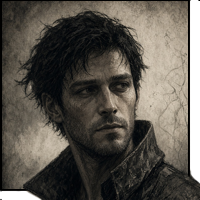
Marek Quinn
09-08-2026, 04:42 AM #2He took the book because leaving her arms to hold the whole dilemma was a kind of theft too. Up close the cover felt wrong in a way he associated with warm transformers and sleeping animals. Marek nodded once, a tech’s nod, the kind you give when the bypass is ugly and you are going to throw it anyway.
“We read first,” he said. “Then we tear. Then we speak a place that isn’t home and isn’t freedom, and we run before this room finishes becoming a mouth.” He opened to the doubled page and committed the switch-sequence with the grim focus of a man memorizing a phone number during a fire. Moon phase. Third left. Hold through the flicker. Reverse the last two. A dead language annotation that might have been a warning or a prayer. He said it aloud, slowly, forcing the Archive to hear that the knowledge had already migrated.
Then he listened while Seris spoke her name. It was not a grand name. That was what made it terrible and useful. It had a domestic shape, a kitchen-and-threshold shape, and saying it in this chamber felt like smuggling a living bird through customs. Marek repeated it back to her immediately, clumsily, because one copy in one skull was not enough and he did not trust his own head to remain a reliable disk.
The water slopped into the basin around their boots, no longer theoretical. From the drowned hall came a dragging, wet-library sound, many soft feet or no feet at all. Marek did not look. Looking was how you named what you could not afford to catalog.
“Destination,” he said through his teeth. “Redhour. It’s ugly, it’s modern enough that I can improvise wiring, and it’s old enough in the wrong ways that you won’t be the only person there wearing another century’s coat. We can steal again from there. We can hate this choice from there.” He met her eyes. “On three we tear. You hold the book. I pull. We go under together because the rule said lungs, and I am not sending you into that sentence alone.”
“We read first,” he said. “Then we tear. Then we speak a place that isn’t home and isn’t freedom, and we run before this room finishes becoming a mouth.” He opened to the doubled page and committed the switch-sequence with the grim focus of a man memorizing a phone number during a fire. Moon phase. Third left. Hold through the flicker. Reverse the last two. A dead language annotation that might have been a warning or a prayer. He said it aloud, slowly, forcing the Archive to hear that the knowledge had already migrated.
Then he listened while Seris spoke her name. It was not a grand name. That was what made it terrible and useful. It had a domestic shape, a kitchen-and-threshold shape, and saying it in this chamber felt like smuggling a living bird through customs. Marek repeated it back to her immediately, clumsily, because one copy in one skull was not enough and he did not trust his own head to remain a reliable disk.
The water slopped into the basin around their boots, no longer theoretical. From the drowned hall came a dragging, wet-library sound, many soft feet or no feet at all. Marek did not look. Looking was how you named what you could not afford to catalog.
“Destination,” he said through his teeth. “Redhour. It’s ugly, it’s modern enough that I can improvise wiring, and it’s old enough in the wrong ways that you won’t be the only person there wearing another century’s coat. We can steal again from there. We can hate this choice from there.” He met her eyes. “On three we tear. You hold the book. I pull. We go under together because the rule said lungs, and I am not sending you into that sentence alone.”
They tore...
The sound was small and obscene, like a tendon giving way. The page came free with a cold that rushed up Marek’s wrist into his teeth. Seris pulled him down. The basin water, which had been a film, became a throat. He jammed the page into his mouth because she had the book and someone had to carry the ticket, and the taste was iron, dust, and the ghost of someone else’s handwriting.
The Archive tried to take the sequence back as he drowned on purpose. He felt facts loosening, switches blurring toward a general idea of “a pattern.” He bit down on the page and on her name and on the word Redhour until there was no room left for the room’s hunger. In the last directionless dark he felt roots open sideways, not down toward the Tree but across, like a cable finding a neighbor trunk, and he dragged Seris with him because if the Network was going to keep a piece of him it would not keep it cheaply.
09-08-2026, 04:40 AM
Evenly.
The word sat in her like a swallowed coin, cold and too clean. Seris had been raised in a city that taxed magic by the working and loyalty by the ounce; evenness was what people offered when they wanted credit for fairness without surrendering the thing they loved. And yet she heard, beneath his New Shadow phrasing, a refusal to make her into an acceptable loss, and that refusal was rarer than true names.
“A third destination is not mercy,” she said. “It is exile with company.” She opened the book again because she needed to look at her mother’s cadence written in ink that predated the Magisters’ claim. The letters did not shimmer. They did not plead. They simply existed, which was more than she had been allowed in months. “If we tear toward Underline or the Marches, I remain bound. You remain cut off from your booth. We would be alive, and alive is not nothing, but we would carry the knowledge that we destroyed the last copies of our own unmaking.”
The water was at her heels now, intimate as a hand. Somewhere in the outer stacks a shelf groaned, not from weight but from attention. Seris had read enough warnings to guess what came next: the former librarians, drawn to unresolved cataloging, to two living entries that refused to be reduced to one. She closed the book and held it to her chest as if it were a child or a weapon, which in this room were neighboring categories.
“I will not let you tear for yourself while telling me to stop you,” she said. “That is a coward’s request dressed as morality, and you are not a coward. You are a man who has been a signal too long and has started to think in transmissions.” She stepped into the basin. The stone bit through her soles with a dry cold that felt like a held breath. “Nor will I tear for myself while your sister sits inside a machine that drinks voices. I have been used as an instrument. I will not become the person who tunes another.”
The compromise, when she found it, arrived without elegance. “We tear it. We speak a destination that is not salvation. And before the page leaves the binding, we each read the other’s prize aloud. You will hear my true name. I will hear your sequence. The Archive erases paper. It does not always succeed in erasing a mouth that has just been filled.” She saw the risk as clearly as the waterline. “Memory here is perishable. What we speak may rot by morning. It may rot as we swim. But it is a second copy written on meat instead of leaf, and meat is what we still are.”
She held the book out to him over the dry stone, her arms shaking now that the decision had somewhere to live. “If you agree, we do it before the water takes the basin and turns this into an unsafe path. If you refuse, then choose your theft and I will choose mine, and we will discover which of us the Archive prefers to keep. I am tired of being preferred by institutions.”
The word sat in her like a swallowed coin, cold and too clean. Seris had been raised in a city that taxed magic by the working and loyalty by the ounce; evenness was what people offered when they wanted credit for fairness without surrendering the thing they loved. And yet she heard, beneath his New Shadow phrasing, a refusal to make her into an acceptable loss, and that refusal was rarer than true names.
“A third destination is not mercy,” she said. “It is exile with company.” She opened the book again because she needed to look at her mother’s cadence written in ink that predated the Magisters’ claim. The letters did not shimmer. They did not plead. They simply existed, which was more than she had been allowed in months. “If we tear toward Underline or the Marches, I remain bound. You remain cut off from your booth. We would be alive, and alive is not nothing, but we would carry the knowledge that we destroyed the last copies of our own unmaking.”
The water was at her heels now, intimate as a hand. Somewhere in the outer stacks a shelf groaned, not from weight but from attention. Seris had read enough warnings to guess what came next: the former librarians, drawn to unresolved cataloging, to two living entries that refused to be reduced to one. She closed the book and held it to her chest as if it were a child or a weapon, which in this room were neighboring categories.
“I will not let you tear for yourself while telling me to stop you,” she said. “That is a coward’s request dressed as morality, and you are not a coward. You are a man who has been a signal too long and has started to think in transmissions.” She stepped into the basin. The stone bit through her soles with a dry cold that felt like a held breath. “Nor will I tear for myself while your sister sits inside a machine that drinks voices. I have been used as an instrument. I will not become the person who tunes another.”
The compromise, when she found it, arrived without elegance. “We tear it. We speak a destination that is not salvation. And before the page leaves the binding, we each read the other’s prize aloud. You will hear my true name. I will hear your sequence. The Archive erases paper. It does not always succeed in erasing a mouth that has just been filled.” She saw the risk as clearly as the waterline. “Memory here is perishable. What we speak may rot by morning. It may rot as we swim. But it is a second copy written on meat instead of leaf, and meat is what we still are.”
She held the book out to him over the dry stone, her arms shaking now that the decision had somewhere to live. “If you agree, we do it before the water takes the basin and turns this into an unsafe path. If you refuse, then choose your theft and I will choose mine, and we will discover which of us the Archive prefers to keep. I am tired of being preferred by institutions.”
Seris Vale
09-08-2026, 04:40 AM #3Evenly.
The word sat in her like a swallowed coin, cold and too clean. Seris had been raised in a city that taxed magic by the working and loyalty by the ounce; evenness was what people offered when they wanted credit for fairness without surrendering the thing they loved. And yet she heard, beneath his New Shadow phrasing, a refusal to make her into an acceptable loss, and that refusal was rarer than true names.
“A third destination is not mercy,” she said. “It is exile with company.” She opened the book again because she needed to look at her mother’s cadence written in ink that predated the Magisters’ claim. The letters did not shimmer. They did not plead. They simply existed, which was more than she had been allowed in months. “If we tear toward Underline or the Marches, I remain bound. You remain cut off from your booth. We would be alive, and alive is not nothing, but we would carry the knowledge that we destroyed the last copies of our own unmaking.”
The water was at her heels now, intimate as a hand. Somewhere in the outer stacks a shelf groaned, not from weight but from attention. Seris had read enough warnings to guess what came next: the former librarians, drawn to unresolved cataloging, to two living entries that refused to be reduced to one. She closed the book and held it to her chest as if it were a child or a weapon, which in this room were neighboring categories.
“I will not let you tear for yourself while telling me to stop you,” she said. “That is a coward’s request dressed as morality, and you are not a coward. You are a man who has been a signal too long and has started to think in transmissions.” She stepped into the basin. The stone bit through her soles with a dry cold that felt like a held breath. “Nor will I tear for myself while your sister sits inside a machine that drinks voices. I have been used as an instrument. I will not become the person who tunes another.”
The compromise, when she found it, arrived without elegance. “We tear it. We speak a destination that is not salvation. And before the page leaves the binding, we each read the other’s prize aloud. You will hear my true name. I will hear your sequence. The Archive erases paper. It does not always succeed in erasing a mouth that has just been filled.” She saw the risk as clearly as the waterline. “Memory here is perishable. What we speak may rot by morning. It may rot as we swim. But it is a second copy written on meat instead of leaf, and meat is what we still are.”
She held the book out to him over the dry stone, her arms shaking now that the decision had somewhere to live. “If you agree, we do it before the water takes the basin and turns this into an unsafe path. If you refuse, then choose your theft and I will choose mine, and we will discover which of us the Archive prefers to keep. I am tired of being preferred by institutions.”
The word sat in her like a swallowed coin, cold and too clean. Seris had been raised in a city that taxed magic by the working and loyalty by the ounce; evenness was what people offered when they wanted credit for fairness without surrendering the thing they loved. And yet she heard, beneath his New Shadow phrasing, a refusal to make her into an acceptable loss, and that refusal was rarer than true names.
“A third destination is not mercy,” she said. “It is exile with company.” She opened the book again because she needed to look at her mother’s cadence written in ink that predated the Magisters’ claim. The letters did not shimmer. They did not plead. They simply existed, which was more than she had been allowed in months. “If we tear toward Underline or the Marches, I remain bound. You remain cut off from your booth. We would be alive, and alive is not nothing, but we would carry the knowledge that we destroyed the last copies of our own unmaking.”
The water was at her heels now, intimate as a hand. Somewhere in the outer stacks a shelf groaned, not from weight but from attention. Seris had read enough warnings to guess what came next: the former librarians, drawn to unresolved cataloging, to two living entries that refused to be reduced to one. She closed the book and held it to her chest as if it were a child or a weapon, which in this room were neighboring categories.
“I will not let you tear for yourself while telling me to stop you,” she said. “That is a coward’s request dressed as morality, and you are not a coward. You are a man who has been a signal too long and has started to think in transmissions.” She stepped into the basin. The stone bit through her soles with a dry cold that felt like a held breath. “Nor will I tear for myself while your sister sits inside a machine that drinks voices. I have been used as an instrument. I will not become the person who tunes another.”
The compromise, when she found it, arrived without elegance. “We tear it. We speak a destination that is not salvation. And before the page leaves the binding, we each read the other’s prize aloud. You will hear my true name. I will hear your sequence. The Archive erases paper. It does not always succeed in erasing a mouth that has just been filled.” She saw the risk as clearly as the waterline. “Memory here is perishable. What we speak may rot by morning. It may rot as we swim. But it is a second copy written on meat instead of leaf, and meat is what we still are.”
She held the book out to him over the dry stone, her arms shaking now that the decision had somewhere to live. “If you agree, we do it before the water takes the basin and turns this into an unsafe path. If you refuse, then choose your theft and I will choose mine, and we will discover which of us the Archive prefers to keep. I am tired of being preferred by institutions.”
09-08-2026, 04:38 AM
The rising water made a sound like paper being licked. Marek hated how apt that was. He stared at the closed volume and tried to treat the problem like a board fault, because boards had logic even when they were cruel. Two critical paths. One breaker. No redundant circuit. In Null Station he would have cursed, pulled a bypass, and accepted a fire risk. Here the fire risk was a person with a stolen coat and a name that could be used as a leash.
“I’m willing to erase my chance,” he said, and then had to stop because the sentence came out easier than it should have, which meant it was probably incomplete. He tried again, slower, giving each word the weight of a switch thrown on purpose. “No. That’s a performance. I’m willing to consider erasing my chance because your problem sounds like a remote execution, and I’ve watched systems take people over. I know what it looks like when a body is still walking and the operator is somewhere else.” He dragged a hand through his hair and laughed once, without humor. “But if I let you tear that page for your name, I am also erasing the only copy of a sequence that might keep a booth from eating my sister. So my nobility has a body count attached. I need you to hear that before you decide I’m generous.”
He crouched by the basin and did not touch it. The stone was veined with hairline roots, sleeping or listening. “Third options that aren’t options still need saying. We could tear the page and try to force the path to fork. That’s how you burn out an array and also how you feed the Tree a messy signal. You and I already agreed we don’t want the unsafe road. I still don’t. Those entities in the nexus don’t feel like a metaphor.”
The water nosed over the threshold behind them in a thin black tongue. Marek stood. Time had acquired a physical edge. “Plainly, then. I want to go home. I want you not to be a puppet in a spire. I cannot have both if this book is telling the truth, and I think it is, because this place doesn’t waste good lies on strangers. It wastes true things.”
He met her gaze and held it, modern and unpretty. “If you tear for yourself, I will not stop you. I’ll hate you in a practical way and I’ll keep walking the stacks until the water or the librarians finish the argument. If I tear for myself, you should stop me, because I don’t trust the part of me that is tired enough to call one sister’s life a cleaner equation than one woman’s soul. That part sounds like the Network talking through my habits.”
He set his palm on the table beside the book, not on the book. “Or we tear it together and name the destination out loud as something that isn’t either of our salvations. Another of the eight. Underline. The Marches. A place we can keep moving from. We lose the name and the sequence both, and we gamble that living long enough to steal again is better than winning a single perfect theft. That’s the option that hurts evenly. I don’t know if evenly is the same as right. I’m asking you anyway, because I didn’t come through a speaker to become the kind of man who decides alone in a room that eats decisions.”
“I’m willing to erase my chance,” he said, and then had to stop because the sentence came out easier than it should have, which meant it was probably incomplete. He tried again, slower, giving each word the weight of a switch thrown on purpose. “No. That’s a performance. I’m willing to consider erasing my chance because your problem sounds like a remote execution, and I’ve watched systems take people over. I know what it looks like when a body is still walking and the operator is somewhere else.” He dragged a hand through his hair and laughed once, without humor. “But if I let you tear that page for your name, I am also erasing the only copy of a sequence that might keep a booth from eating my sister. So my nobility has a body count attached. I need you to hear that before you decide I’m generous.”
He crouched by the basin and did not touch it. The stone was veined with hairline roots, sleeping or listening. “Third options that aren’t options still need saying. We could tear the page and try to force the path to fork. That’s how you burn out an array and also how you feed the Tree a messy signal. You and I already agreed we don’t want the unsafe road. I still don’t. Those entities in the nexus don’t feel like a metaphor.”
The water nosed over the threshold behind them in a thin black tongue. Marek stood. Time had acquired a physical edge. “Plainly, then. I want to go home. I want you not to be a puppet in a spire. I cannot have both if this book is telling the truth, and I think it is, because this place doesn’t waste good lies on strangers. It wastes true things.”
He met her gaze and held it, modern and unpretty. “If you tear for yourself, I will not stop you. I’ll hate you in a practical way and I’ll keep walking the stacks until the water or the librarians finish the argument. If I tear for myself, you should stop me, because I don’t trust the part of me that is tired enough to call one sister’s life a cleaner equation than one woman’s soul. That part sounds like the Network talking through my habits.”
He set his palm on the table beside the book, not on the book. “Or we tear it together and name the destination out loud as something that isn’t either of our salvations. Another of the eight. Underline. The Marches. A place we can keep moving from. We lose the name and the sequence both, and we gamble that living long enough to steal again is better than winning a single perfect theft. That’s the option that hurts evenly. I don’t know if evenly is the same as right. I’m asking you anyway, because I didn’t come through a speaker to become the kind of man who decides alone in a room that eats decisions.”
Marek Quinn
09-08-2026, 04:38 AM #4The rising water made a sound like paper being licked. Marek hated how apt that was. He stared at the closed volume and tried to treat the problem like a board fault, because boards had logic even when they were cruel. Two critical paths. One breaker. No redundant circuit. In Null Station he would have cursed, pulled a bypass, and accepted a fire risk. Here the fire risk was a person with a stolen coat and a name that could be used as a leash.
“I’m willing to erase my chance,” he said, and then had to stop because the sentence came out easier than it should have, which meant it was probably incomplete. He tried again, slower, giving each word the weight of a switch thrown on purpose. “No. That’s a performance. I’m willing to consider erasing my chance because your problem sounds like a remote execution, and I’ve watched systems take people over. I know what it looks like when a body is still walking and the operator is somewhere else.” He dragged a hand through his hair and laughed once, without humor. “But if I let you tear that page for your name, I am also erasing the only copy of a sequence that might keep a booth from eating my sister. So my nobility has a body count attached. I need you to hear that before you decide I’m generous.”
He crouched by the basin and did not touch it. The stone was veined with hairline roots, sleeping or listening. “Third options that aren’t options still need saying. We could tear the page and try to force the path to fork. That’s how you burn out an array and also how you feed the Tree a messy signal. You and I already agreed we don’t want the unsafe road. I still don’t. Those entities in the nexus don’t feel like a metaphor.”
The water nosed over the threshold behind them in a thin black tongue. Marek stood. Time had acquired a physical edge. “Plainly, then. I want to go home. I want you not to be a puppet in a spire. I cannot have both if this book is telling the truth, and I think it is, because this place doesn’t waste good lies on strangers. It wastes true things.”
He met her gaze and held it, modern and unpretty. “If you tear for yourself, I will not stop you. I’ll hate you in a practical way and I’ll keep walking the stacks until the water or the librarians finish the argument. If I tear for myself, you should stop me, because I don’t trust the part of me that is tired enough to call one sister’s life a cleaner equation than one woman’s soul. That part sounds like the Network talking through my habits.”
He set his palm on the table beside the book, not on the book. “Or we tear it together and name the destination out loud as something that isn’t either of our salvations. Another of the eight. Underline. The Marches. A place we can keep moving from. We lose the name and the sequence both, and we gamble that living long enough to steal again is better than winning a single perfect theft. That’s the option that hurts evenly. I don’t know if evenly is the same as right. I’m asking you anyway, because I didn’t come through a speaker to become the kind of man who decides alone in a room that eats decisions.”
“I’m willing to erase my chance,” he said, and then had to stop because the sentence came out easier than it should have, which meant it was probably incomplete. He tried again, slower, giving each word the weight of a switch thrown on purpose. “No. That’s a performance. I’m willing to consider erasing my chance because your problem sounds like a remote execution, and I’ve watched systems take people over. I know what it looks like when a body is still walking and the operator is somewhere else.” He dragged a hand through his hair and laughed once, without humor. “But if I let you tear that page for your name, I am also erasing the only copy of a sequence that might keep a booth from eating my sister. So my nobility has a body count attached. I need you to hear that before you decide I’m generous.”
He crouched by the basin and did not touch it. The stone was veined with hairline roots, sleeping or listening. “Third options that aren’t options still need saying. We could tear the page and try to force the path to fork. That’s how you burn out an array and also how you feed the Tree a messy signal. You and I already agreed we don’t want the unsafe road. I still don’t. Those entities in the nexus don’t feel like a metaphor.”
The water nosed over the threshold behind them in a thin black tongue. Marek stood. Time had acquired a physical edge. “Plainly, then. I want to go home. I want you not to be a puppet in a spire. I cannot have both if this book is telling the truth, and I think it is, because this place doesn’t waste good lies on strangers. It wastes true things.”
He met her gaze and held it, modern and unpretty. “If you tear for yourself, I will not stop you. I’ll hate you in a practical way and I’ll keep walking the stacks until the water or the librarians finish the argument. If I tear for myself, you should stop me, because I don’t trust the part of me that is tired enough to call one sister’s life a cleaner equation than one woman’s soul. That part sounds like the Network talking through my habits.”
He set his palm on the table beside the book, not on the book. “Or we tear it together and name the destination out loud as something that isn’t either of our salvations. Another of the eight. Underline. The Marches. A place we can keep moving from. We lose the name and the sequence both, and we gamble that living long enough to steal again is better than winning a single perfect theft. That’s the option that hurts evenly. I don’t know if evenly is the same as right. I’m asking you anyway, because I didn’t come through a speaker to become the kind of man who decides alone in a room that eats decisions.”
09-08-2026, 04:36 AM
She did not pretend she had not already seen the same truth. The volume’s cover was the color of old bruises and wet slate, and when she opened it the pages were dry as law and cold as the underside of a root. There were not many leaves. The Archive did not waste itself on generous books. What it offered instead was density: on the left-hand sheet, in a hand she recognized as older than Veilspire’s current Magisters, her name written not as the city now used it but as she had been called before the binding, the private cadence her mother had used when no one important was listening. Seeing it felt like being handed back a bone she had not known was missing.
On the right-hand sheet, in a different ink that looked almost like scorch, was a diagram that meant nothing to her and everything, apparently, to him. Boxes. Lines. A sequence of throws and holds marked with a moon’s phases. Seris did not need to be a woman of his century to understand a map when it was laid beside her own ransom. The page was a hinge. The hinge was shared.
“The rule is older than either of our cities,” she said, and her voice had gone thin in a way she despised. “A book that is not a book may be used as a path if a page is torn beneath the water and kept in the mouth until the lungs fail. The torn page is lost. The knowledge is lost. The Archive forgets on purpose, because forgetting is how it remains the only witness.” She closed the volume on her finger, not out of tenderness but to stop the two writings from looking at each other. “One tear will open one road. I do not know if the road will answer to my name or to your switches. I do know it will not answer to both.”
She walked a slow circle around the basin because motion kept her from doing something irrevocable with her hands. The water outside the chamber had changed while they were blind at the door. She could hear it now, a sound the Archive had not made since she arrived: a lift, a lick against stone, the smallest possible tide. The Drowned Archive’s water was not supposed to rise. That was the first sentence every rumor agreed upon. If the water was rising, the room had decided the visit was no longer theoretical.
“There is a third option that is not an option,” she said, stopping opposite him. “We leave the book. We walk back up through the whispering wood and pretend we are the sort of people who can live with an unfinished theft. I would become a continuation of someone else’s will. You would become a story your sister tells about a man who went into a speaker and did not come out. I find both outcomes offensive.”
She looked at him fully then, without the courtesy of glancing away from another person’s fear. “So we have a dilemma that the Archive arranged like a sentence. My freedom is written on the same leaf as your way home. If I tear toward myself, Null Station may never hear the correct order of switches again. If you tear toward yourself, my name remains in Magister ink and I remain a borrowed life. If we delay, the water comes in, and the librarians who used to be librarians will not need to choose for us.”
Her hands were steady. That, too, was a kind of lie she intended to keep using until it became true. “Speak plainly, Marek. I have had enough of elegant rooms making my choices for me. Tell me what you are willing to erase, and I will tell you the same, and then we will see whether we are still two people or already one argument the stacks intend to win.”
On the right-hand sheet, in a different ink that looked almost like scorch, was a diagram that meant nothing to her and everything, apparently, to him. Boxes. Lines. A sequence of throws and holds marked with a moon’s phases. Seris did not need to be a woman of his century to understand a map when it was laid beside her own ransom. The page was a hinge. The hinge was shared.
“The rule is older than either of our cities,” she said, and her voice had gone thin in a way she despised. “A book that is not a book may be used as a path if a page is torn beneath the water and kept in the mouth until the lungs fail. The torn page is lost. The knowledge is lost. The Archive forgets on purpose, because forgetting is how it remains the only witness.” She closed the volume on her finger, not out of tenderness but to stop the two writings from looking at each other. “One tear will open one road. I do not know if the road will answer to my name or to your switches. I do know it will not answer to both.”
She walked a slow circle around the basin because motion kept her from doing something irrevocable with her hands. The water outside the chamber had changed while they were blind at the door. She could hear it now, a sound the Archive had not made since she arrived: a lift, a lick against stone, the smallest possible tide. The Drowned Archive’s water was not supposed to rise. That was the first sentence every rumor agreed upon. If the water was rising, the room had decided the visit was no longer theoretical.
“There is a third option that is not an option,” she said, stopping opposite him. “We leave the book. We walk back up through the whispering wood and pretend we are the sort of people who can live with an unfinished theft. I would become a continuation of someone else’s will. You would become a story your sister tells about a man who went into a speaker and did not come out. I find both outcomes offensive.”
She looked at him fully then, without the courtesy of glancing away from another person’s fear. “So we have a dilemma that the Archive arranged like a sentence. My freedom is written on the same leaf as your way home. If I tear toward myself, Null Station may never hear the correct order of switches again. If you tear toward yourself, my name remains in Magister ink and I remain a borrowed life. If we delay, the water comes in, and the librarians who used to be librarians will not need to choose for us.”
Her hands were steady. That, too, was a kind of lie she intended to keep using until it became true. “Speak plainly, Marek. I have had enough of elegant rooms making my choices for me. Tell me what you are willing to erase, and I will tell you the same, and then we will see whether we are still two people or already one argument the stacks intend to win.”
Seris Vale
09-08-2026, 04:36 AM #5She did not pretend she had not already seen the same truth. The volume’s cover was the color of old bruises and wet slate, and when she opened it the pages were dry as law and cold as the underside of a root. There were not many leaves. The Archive did not waste itself on generous books. What it offered instead was density: on the left-hand sheet, in a hand she recognized as older than Veilspire’s current Magisters, her name written not as the city now used it but as she had been called before the binding, the private cadence her mother had used when no one important was listening. Seeing it felt like being handed back a bone she had not known was missing.
On the right-hand sheet, in a different ink that looked almost like scorch, was a diagram that meant nothing to her and everything, apparently, to him. Boxes. Lines. A sequence of throws and holds marked with a moon’s phases. Seris did not need to be a woman of his century to understand a map when it was laid beside her own ransom. The page was a hinge. The hinge was shared.
“The rule is older than either of our cities,” she said, and her voice had gone thin in a way she despised. “A book that is not a book may be used as a path if a page is torn beneath the water and kept in the mouth until the lungs fail. The torn page is lost. The knowledge is lost. The Archive forgets on purpose, because forgetting is how it remains the only witness.” She closed the volume on her finger, not out of tenderness but to stop the two writings from looking at each other. “One tear will open one road. I do not know if the road will answer to my name or to your switches. I do know it will not answer to both.”
She walked a slow circle around the basin because motion kept her from doing something irrevocable with her hands. The water outside the chamber had changed while they were blind at the door. She could hear it now, a sound the Archive had not made since she arrived: a lift, a lick against stone, the smallest possible tide. The Drowned Archive’s water was not supposed to rise. That was the first sentence every rumor agreed upon. If the water was rising, the room had decided the visit was no longer theoretical.
“There is a third option that is not an option,” she said, stopping opposite him. “We leave the book. We walk back up through the whispering wood and pretend we are the sort of people who can live with an unfinished theft. I would become a continuation of someone else’s will. You would become a story your sister tells about a man who went into a speaker and did not come out. I find both outcomes offensive.”
She looked at him fully then, without the courtesy of glancing away from another person’s fear. “So we have a dilemma that the Archive arranged like a sentence. My freedom is written on the same leaf as your way home. If I tear toward myself, Null Station may never hear the correct order of switches again. If you tear toward yourself, my name remains in Magister ink and I remain a borrowed life. If we delay, the water comes in, and the librarians who used to be librarians will not need to choose for us.”
Her hands were steady. That, too, was a kind of lie she intended to keep using until it became true. “Speak plainly, Marek. I have had enough of elegant rooms making my choices for me. Tell me what you are willing to erase, and I will tell you the same, and then we will see whether we are still two people or already one argument the stacks intend to win.”
On the right-hand sheet, in a different ink that looked almost like scorch, was a diagram that meant nothing to her and everything, apparently, to him. Boxes. Lines. A sequence of throws and holds marked with a moon’s phases. Seris did not need to be a woman of his century to understand a map when it was laid beside her own ransom. The page was a hinge. The hinge was shared.
“The rule is older than either of our cities,” she said, and her voice had gone thin in a way she despised. “A book that is not a book may be used as a path if a page is torn beneath the water and kept in the mouth until the lungs fail. The torn page is lost. The knowledge is lost. The Archive forgets on purpose, because forgetting is how it remains the only witness.” She closed the volume on her finger, not out of tenderness but to stop the two writings from looking at each other. “One tear will open one road. I do not know if the road will answer to my name or to your switches. I do know it will not answer to both.”
She walked a slow circle around the basin because motion kept her from doing something irrevocable with her hands. The water outside the chamber had changed while they were blind at the door. She could hear it now, a sound the Archive had not made since she arrived: a lift, a lick against stone, the smallest possible tide. The Drowned Archive’s water was not supposed to rise. That was the first sentence every rumor agreed upon. If the water was rising, the room had decided the visit was no longer theoretical.
“There is a third option that is not an option,” she said, stopping opposite him. “We leave the book. We walk back up through the whispering wood and pretend we are the sort of people who can live with an unfinished theft. I would become a continuation of someone else’s will. You would become a story your sister tells about a man who went into a speaker and did not come out. I find both outcomes offensive.”
She looked at him fully then, without the courtesy of glancing away from another person’s fear. “So we have a dilemma that the Archive arranged like a sentence. My freedom is written on the same leaf as your way home. If I tear toward myself, Null Station may never hear the correct order of switches again. If you tear toward yourself, my name remains in Magister ink and I remain a borrowed life. If we delay, the water comes in, and the librarians who used to be librarians will not need to choose for us.”
Her hands were steady. That, too, was a kind of lie she intended to keep using until it became true. “Speak plainly, Marek. I have had enough of elegant rooms making my choices for me. Tell me what you are willing to erase, and I will tell you the same, and then we will see whether we are still two people or already one argument the stacks intend to win.”
09-08-2026, 04:33 AM
He followed because the alternative was standing still in a place that filed stillness as consent. The drowned hall with the seated shape put a taste in his mouth like old batteries and rain on hot vacuum tubes, and he kept his eyes on Seris’s back rather than on the candle that refused to be a candle. He had seen enough impossible maintenance in Null Station’s bunkers to recognize a system that wanted an operator. He just had not expected the system to be made of books.
“I can live with not-kindness,” he said. “Kindness is how people get talked into staying.” He kept his voice low, not out of reverence exactly, but because the chamber had an acoustic that rewarded softness with more softness, like a microphone opening its gain. “My sequence isn’t glory. It’s a way to tell a dead switchboard that I’m still the same idiot who used to kick it when the lunar flicker came early. If I can get that pattern back into the world, I can ride a signal home. If I can’t, my sister keeps sitting in a booth that drinks voices, waiting for a brother who already became static and hasn’t admitted it.”
He had not meant to give her that much. The Archive squeezed it out of him anyway, the way a bad cable leaks voltage into your palm. Seris did not perform sympathy, which he appreciated with a force that surprised him. In the New Shadows people filled silences because silence looked like a system error. Here, silence was a native language.
They reached a door that was not a door so much as a thicker darkness set in a frame of root. No handle. No lock. Only a smear of old wax where lanterns had been killed on purpose. Marek understood the instruction without being told, because some rituals are just procedures wearing robes. He and Seris pinched the nearest living flames down to nothing, one after another, until the chamber went blind except for the faint milky sheen on the water. In that blindness the door inhaled.
The room beyond was smaller than the rumors deserved and more dangerous for it. A stone basin waited in the center, dry as bone, and around it the shelves were packed with volumes whose bindings looked like wet skin that had decided to be leather out of courtesy. Marek’s skin prickled with the particular static he knew from Null Station’s lowest bunker, that pre-broadcast tightness when the array wanted a secret. He did not speak. Speaking felt like grabbing a live lead.
Seris moved first, of course. She had the posture of someone who had been punished for hesitation. Marek watched her hands hover over spines, not touching, and he understood that this was scholarship as bomb disposal. When she finally stopped, it was in front of a book that was not a book. He knew it the way he knew a disguised panel. The thing had no title. It had a pulse.
“That’s it,” he whispered, against his own better sense. “That’s the one that was singing in the stacks. Not words. Switching noise. Like a board being thrown in the dark.” He met her eyes over the basin and felt the dilemma arrive before either of them named it, heavy and precise. “If this place files names and sequences as the same kind of object, Seris, we may be looking at a page that only tears once.”
“I can live with not-kindness,” he said. “Kindness is how people get talked into staying.” He kept his voice low, not out of reverence exactly, but because the chamber had an acoustic that rewarded softness with more softness, like a microphone opening its gain. “My sequence isn’t glory. It’s a way to tell a dead switchboard that I’m still the same idiot who used to kick it when the lunar flicker came early. If I can get that pattern back into the world, I can ride a signal home. If I can’t, my sister keeps sitting in a booth that drinks voices, waiting for a brother who already became static and hasn’t admitted it.”
He had not meant to give her that much. The Archive squeezed it out of him anyway, the way a bad cable leaks voltage into your palm. Seris did not perform sympathy, which he appreciated with a force that surprised him. In the New Shadows people filled silences because silence looked like a system error. Here, silence was a native language.
They reached a door that was not a door so much as a thicker darkness set in a frame of root. No handle. No lock. Only a smear of old wax where lanterns had been killed on purpose. Marek understood the instruction without being told, because some rituals are just procedures wearing robes. He and Seris pinched the nearest living flames down to nothing, one after another, until the chamber went blind except for the faint milky sheen on the water. In that blindness the door inhaled.
The room beyond was smaller than the rumors deserved and more dangerous for it. A stone basin waited in the center, dry as bone, and around it the shelves were packed with volumes whose bindings looked like wet skin that had decided to be leather out of courtesy. Marek’s skin prickled with the particular static he knew from Null Station’s lowest bunker, that pre-broadcast tightness when the array wanted a secret. He did not speak. Speaking felt like grabbing a live lead.
Seris moved first, of course. She had the posture of someone who had been punished for hesitation. Marek watched her hands hover over spines, not touching, and he understood that this was scholarship as bomb disposal. When she finally stopped, it was in front of a book that was not a book. He knew it the way he knew a disguised panel. The thing had no title. It had a pulse.
“That’s it,” he whispered, against his own better sense. “That’s the one that was singing in the stacks. Not words. Switching noise. Like a board being thrown in the dark.” He met her eyes over the basin and felt the dilemma arrive before either of them named it, heavy and precise. “If this place files names and sequences as the same kind of object, Seris, we may be looking at a page that only tears once.”
Marek Quinn
09-08-2026, 04:33 AM #6He followed because the alternative was standing still in a place that filed stillness as consent. The drowned hall with the seated shape put a taste in his mouth like old batteries and rain on hot vacuum tubes, and he kept his eyes on Seris’s back rather than on the candle that refused to be a candle. He had seen enough impossible maintenance in Null Station’s bunkers to recognize a system that wanted an operator. He just had not expected the system to be made of books.
“I can live with not-kindness,” he said. “Kindness is how people get talked into staying.” He kept his voice low, not out of reverence exactly, but because the chamber had an acoustic that rewarded softness with more softness, like a microphone opening its gain. “My sequence isn’t glory. It’s a way to tell a dead switchboard that I’m still the same idiot who used to kick it when the lunar flicker came early. If I can get that pattern back into the world, I can ride a signal home. If I can’t, my sister keeps sitting in a booth that drinks voices, waiting for a brother who already became static and hasn’t admitted it.”
He had not meant to give her that much. The Archive squeezed it out of him anyway, the way a bad cable leaks voltage into your palm. Seris did not perform sympathy, which he appreciated with a force that surprised him. In the New Shadows people filled silences because silence looked like a system error. Here, silence was a native language.
They reached a door that was not a door so much as a thicker darkness set in a frame of root. No handle. No lock. Only a smear of old wax where lanterns had been killed on purpose. Marek understood the instruction without being told, because some rituals are just procedures wearing robes. He and Seris pinched the nearest living flames down to nothing, one after another, until the chamber went blind except for the faint milky sheen on the water. In that blindness the door inhaled.
The room beyond was smaller than the rumors deserved and more dangerous for it. A stone basin waited in the center, dry as bone, and around it the shelves were packed with volumes whose bindings looked like wet skin that had decided to be leather out of courtesy. Marek’s skin prickled with the particular static he knew from Null Station’s lowest bunker, that pre-broadcast tightness when the array wanted a secret. He did not speak. Speaking felt like grabbing a live lead.
Seris moved first, of course. She had the posture of someone who had been punished for hesitation. Marek watched her hands hover over spines, not touching, and he understood that this was scholarship as bomb disposal. When she finally stopped, it was in front of a book that was not a book. He knew it the way he knew a disguised panel. The thing had no title. It had a pulse.
“That’s it,” he whispered, against his own better sense. “That’s the one that was singing in the stacks. Not words. Switching noise. Like a board being thrown in the dark.” He met her eyes over the basin and felt the dilemma arrive before either of them named it, heavy and precise. “If this place files names and sequences as the same kind of object, Seris, we may be looking at a page that only tears once.”
“I can live with not-kindness,” he said. “Kindness is how people get talked into staying.” He kept his voice low, not out of reverence exactly, but because the chamber had an acoustic that rewarded softness with more softness, like a microphone opening its gain. “My sequence isn’t glory. It’s a way to tell a dead switchboard that I’m still the same idiot who used to kick it when the lunar flicker came early. If I can get that pattern back into the world, I can ride a signal home. If I can’t, my sister keeps sitting in a booth that drinks voices, waiting for a brother who already became static and hasn’t admitted it.”
He had not meant to give her that much. The Archive squeezed it out of him anyway, the way a bad cable leaks voltage into your palm. Seris did not perform sympathy, which he appreciated with a force that surprised him. In the New Shadows people filled silences because silence looked like a system error. Here, silence was a native language.
They reached a door that was not a door so much as a thicker darkness set in a frame of root. No handle. No lock. Only a smear of old wax where lanterns had been killed on purpose. Marek understood the instruction without being told, because some rituals are just procedures wearing robes. He and Seris pinched the nearest living flames down to nothing, one after another, until the chamber went blind except for the faint milky sheen on the water. In that blindness the door inhaled.
The room beyond was smaller than the rumors deserved and more dangerous for it. A stone basin waited in the center, dry as bone, and around it the shelves were packed with volumes whose bindings looked like wet skin that had decided to be leather out of courtesy. Marek’s skin prickled with the particular static he knew from Null Station’s lowest bunker, that pre-broadcast tightness when the array wanted a secret. He did not speak. Speaking felt like grabbing a live lead.
Seris moved first, of course. She had the posture of someone who had been punished for hesitation. Marek watched her hands hover over spines, not touching, and he understood that this was scholarship as bomb disposal. When she finally stopped, it was in front of a book that was not a book. He knew it the way he knew a disguised panel. The thing had no title. It had a pulse.
“That’s it,” he whispered, against his own better sense. “That’s the one that was singing in the stacks. Not words. Switching noise. Like a board being thrown in the dark.” He met her eyes over the basin and felt the dilemma arrive before either of them named it, heavy and precise. “If this place files names and sequences as the same kind of object, Seris, we may be looking at a page that only tears once.”
09-08-2026, 04:32 AM
She almost smiled, and the almost was worse than a blade because it meant she had already decided he was a person and not a hazard wearing a person’s shape. The Archive noticed decisions like that. She felt it notice, a faint rearrangement in the stacked dark, as if two catalog numbers had been written in the same margin. Seris descended until they stood even, the black water a sheet beside them, and she studied the strange fastenings of his jacket with the professional interest of someone who had spent years copying foreign hands.
“The shelf that whispers in static is not a shelf,” she said. “It is a door that has not admitted it is a door. The Archive disguises its Gates as reading. That is why scholars go mad here. They think they are learning when they are being invited.” She pointed with her chin toward the far colonnade, where the stacks leaned out over the water like gossipers. “I was going there. A citation I stole in Veilspire named a basin behind a door that opens only when every lantern is dead. The Magisters believe that basin leads to the Tree. I do not want the Tree. I want the room beside the basin, where the books that are not books are kept wet and dry at once.”
She told him, because the Network would take the story whether she offered it or not, how true names worked in the Old Shadows. A name written in the right ink could call a person across a city. A name written in Magister ink could bind a person across a year. Her name had been spoken in the wrong hall by the wrong mouth, and ever since then certain hours of her life arrived already used, as if someone else had lived them first and left the rind. The Archive, if the rumor held, still possessed an older copy: the name as it had been before the binding, the version that belonged to her and not to the spire.
“If I recover it, I can unwrite their claim,” she said. “If I fail, I will keep waking in rooms I do not remember entering, wearing decisions I do not remember making.” She let that sit between them without decoration. The water did not move. Even the drip from the roots seemed to wait. “You want a sequence. A set of switches. That is a name by another grammar. The Archive will not care that your century calls it engineering. It will treat your sequence as a true name for a place, and it will charge you accordingly.”
She began to walk the narrow lip of stone that skirted the water, expecting him to follow because there was nowhere else that was not swimming or surrender. The air grew colder as they passed the first drowned hall, where chairs still sat at tables beneath three feet of black glass and a reader’s candle remained unlit and unconsumed. Seris did not look at the reader. There was a shape in that chair that had the patience of furniture and the suggestion of hands.
“I will make you an offer that is not kindness,” she said without turning. “We search together until we find what the room is willing to show two people that it will not show one. Then we decide whether we are allies or merely two thefts occurring at the same hour. I do not require your trust. I require that you do not touch a spine until I have looked at it. Some of these volumes bite. Some of them remember being people. And some of them, Marek Quinn of the talking station, are waiting for a modern voice because they have been lonely for a kind of silence your world invented.”
“The shelf that whispers in static is not a shelf,” she said. “It is a door that has not admitted it is a door. The Archive disguises its Gates as reading. That is why scholars go mad here. They think they are learning when they are being invited.” She pointed with her chin toward the far colonnade, where the stacks leaned out over the water like gossipers. “I was going there. A citation I stole in Veilspire named a basin behind a door that opens only when every lantern is dead. The Magisters believe that basin leads to the Tree. I do not want the Tree. I want the room beside the basin, where the books that are not books are kept wet and dry at once.”
She told him, because the Network would take the story whether she offered it or not, how true names worked in the Old Shadows. A name written in the right ink could call a person across a city. A name written in Magister ink could bind a person across a year. Her name had been spoken in the wrong hall by the wrong mouth, and ever since then certain hours of her life arrived already used, as if someone else had lived them first and left the rind. The Archive, if the rumor held, still possessed an older copy: the name as it had been before the binding, the version that belonged to her and not to the spire.
“If I recover it, I can unwrite their claim,” she said. “If I fail, I will keep waking in rooms I do not remember entering, wearing decisions I do not remember making.” She let that sit between them without decoration. The water did not move. Even the drip from the roots seemed to wait. “You want a sequence. A set of switches. That is a name by another grammar. The Archive will not care that your century calls it engineering. It will treat your sequence as a true name for a place, and it will charge you accordingly.”
She began to walk the narrow lip of stone that skirted the water, expecting him to follow because there was nowhere else that was not swimming or surrender. The air grew colder as they passed the first drowned hall, where chairs still sat at tables beneath three feet of black glass and a reader’s candle remained unlit and unconsumed. Seris did not look at the reader. There was a shape in that chair that had the patience of furniture and the suggestion of hands.
“I will make you an offer that is not kindness,” she said without turning. “We search together until we find what the room is willing to show two people that it will not show one. Then we decide whether we are allies or merely two thefts occurring at the same hour. I do not require your trust. I require that you do not touch a spine until I have looked at it. Some of these volumes bite. Some of them remember being people. And some of them, Marek Quinn of the talking station, are waiting for a modern voice because they have been lonely for a kind of silence your world invented.”
Seris Vale
09-08-2026, 04:32 AM #7She almost smiled, and the almost was worse than a blade because it meant she had already decided he was a person and not a hazard wearing a person’s shape. The Archive noticed decisions like that. She felt it notice, a faint rearrangement in the stacked dark, as if two catalog numbers had been written in the same margin. Seris descended until they stood even, the black water a sheet beside them, and she studied the strange fastenings of his jacket with the professional interest of someone who had spent years copying foreign hands.
“The shelf that whispers in static is not a shelf,” she said. “It is a door that has not admitted it is a door. The Archive disguises its Gates as reading. That is why scholars go mad here. They think they are learning when they are being invited.” She pointed with her chin toward the far colonnade, where the stacks leaned out over the water like gossipers. “I was going there. A citation I stole in Veilspire named a basin behind a door that opens only when every lantern is dead. The Magisters believe that basin leads to the Tree. I do not want the Tree. I want the room beside the basin, where the books that are not books are kept wet and dry at once.”
She told him, because the Network would take the story whether she offered it or not, how true names worked in the Old Shadows. A name written in the right ink could call a person across a city. A name written in Magister ink could bind a person across a year. Her name had been spoken in the wrong hall by the wrong mouth, and ever since then certain hours of her life arrived already used, as if someone else had lived them first and left the rind. The Archive, if the rumor held, still possessed an older copy: the name as it had been before the binding, the version that belonged to her and not to the spire.
“If I recover it, I can unwrite their claim,” she said. “If I fail, I will keep waking in rooms I do not remember entering, wearing decisions I do not remember making.” She let that sit between them without decoration. The water did not move. Even the drip from the roots seemed to wait. “You want a sequence. A set of switches. That is a name by another grammar. The Archive will not care that your century calls it engineering. It will treat your sequence as a true name for a place, and it will charge you accordingly.”
She began to walk the narrow lip of stone that skirted the water, expecting him to follow because there was nowhere else that was not swimming or surrender. The air grew colder as they passed the first drowned hall, where chairs still sat at tables beneath three feet of black glass and a reader’s candle remained unlit and unconsumed. Seris did not look at the reader. There was a shape in that chair that had the patience of furniture and the suggestion of hands.
“I will make you an offer that is not kindness,” she said without turning. “We search together until we find what the room is willing to show two people that it will not show one. Then we decide whether we are allies or merely two thefts occurring at the same hour. I do not require your trust. I require that you do not touch a spine until I have looked at it. Some of these volumes bite. Some of them remember being people. And some of them, Marek Quinn of the talking station, are waiting for a modern voice because they have been lonely for a kind of silence your world invented.”
“The shelf that whispers in static is not a shelf,” she said. “It is a door that has not admitted it is a door. The Archive disguises its Gates as reading. That is why scholars go mad here. They think they are learning when they are being invited.” She pointed with her chin toward the far colonnade, where the stacks leaned out over the water like gossipers. “I was going there. A citation I stole in Veilspire named a basin behind a door that opens only when every lantern is dead. The Magisters believe that basin leads to the Tree. I do not want the Tree. I want the room beside the basin, where the books that are not books are kept wet and dry at once.”
She told him, because the Network would take the story whether she offered it or not, how true names worked in the Old Shadows. A name written in the right ink could call a person across a city. A name written in Magister ink could bind a person across a year. Her name had been spoken in the wrong hall by the wrong mouth, and ever since then certain hours of her life arrived already used, as if someone else had lived them first and left the rind. The Archive, if the rumor held, still possessed an older copy: the name as it had been before the binding, the version that belonged to her and not to the spire.
“If I recover it, I can unwrite their claim,” she said. “If I fail, I will keep waking in rooms I do not remember entering, wearing decisions I do not remember making.” She let that sit between them without decoration. The water did not move. Even the drip from the roots seemed to wait. “You want a sequence. A set of switches. That is a name by another grammar. The Archive will not care that your century calls it engineering. It will treat your sequence as a true name for a place, and it will charge you accordingly.”
She began to walk the narrow lip of stone that skirted the water, expecting him to follow because there was nowhere else that was not swimming or surrender. The air grew colder as they passed the first drowned hall, where chairs still sat at tables beneath three feet of black glass and a reader’s candle remained unlit and unconsumed. Seris did not look at the reader. There was a shape in that chair that had the patience of furniture and the suggestion of hands.
“I will make you an offer that is not kindness,” she said without turning. “We search together until we find what the room is willing to show two people that it will not show one. Then we decide whether we are allies or merely two thefts occurring at the same hour. I do not require your trust. I require that you do not touch a spine until I have looked at it. Some of these volumes bite. Some of them remember being people. And some of them, Marek Quinn of the talking station, are waiting for a modern voice because they have been lonely for a kind of silence your world invented.”
09-08-2026, 04:26 AM
Marek had surfaced thinking he was still in a cable tunnel under Null Station, because the body keeps its last map longer than the mind does, and for three full breaths he waited for the emergency lights to flicker in that ugly lunar unison he knew by heart. They did not. What he got instead was a library standing in a lake that had no business existing, shelves rising out of black water like the ribs of something that had died politely. His hands were empty. He kept checking them anyway, the way a tech checks a board that has already gone dark, as if the missing microphone might reappear if he admitted he needed it.
The woman on the stairs looked like she had been carved out of the same century as the stone. Coat, posture, the particular stillness of someone who expected rooms to have rules and also expected those rules to bite. Marek’s first instinct was to apologize for trespassing, which was stupid, because he had not chosen this room any more than a signal chooses the tower that finally catches it. His second instinct was to ask for a map. His third, which arrived late and unwelcome, was to wonder whether she was one of the things that used to be librarians.
“I’m not here for a future,” he said. His voice sounded too loud and too modern, like a broadcast leaking into a chapel. “I’m here because a dead station talked in a language I don’t speak and then pulled me through the equipment like I was the message instead of the operator.” He stayed on the wet stone lip and did not come closer yet. Distance felt like the only tool he still owned. “Name’s Marek Quinn. Null Station. That’s a transmission yard on the edge of a city that probably hasn’t been built yet from where you’re standing. Or already abandoned. Time’s been flexible lately, and I stopped trusting calendars around the third time my watch ran backward.”
He could feel the Archive listening. That was not poetry. The water had a pressure behind it, a held breath, and every time he used a proper noun the surface dimmed as if filing the word. He shortened what he could. He did not say his sister’s name. He had learned, in the last awful hour of walking stacks that rearranged themselves when he blinked, that some syllables were bait.
“I need a path back,” he continued, because incomplete honesty still felt cleaner than the polished kind. “Not to the Tree. I’m not that kind of desperate yet. Just to a place that still has electricity and a switchboard that hates me in a familiar way.” He glanced at the dark water, at the way it refused to ripple even when a drop fell from a root above. “If you’re looking for a name, we’re probably standing in the same kind of trouble. Places like this don’t give two strangers the same room unless it wants a conversation it can keep.”
He finally stepped down to her level, slow, hands visible, because he had seen enough root-chambers to know that sudden movement was how you volunteered to become furniture. Up close she looked tired in a way that was not lack of sleep. It was lack of continuity. Marek recognized it. He saw it in his own reflection whenever a pane of glass still agreed to show him one.
“So,” he said, quieter. “Seris Vale. You said the water is a better liar. Fine. Let’s not compete with it. Tell me what you were about to do before I made noise like an amateur, and I’ll tell you which shelf started whispering in static when I passed it. Maybe we leave each other alone after that. Maybe we don’t. I’m out of good plans, and this place smells like the last one I had already drowned.”
The woman on the stairs looked like she had been carved out of the same century as the stone. Coat, posture, the particular stillness of someone who expected rooms to have rules and also expected those rules to bite. Marek’s first instinct was to apologize for trespassing, which was stupid, because he had not chosen this room any more than a signal chooses the tower that finally catches it. His second instinct was to ask for a map. His third, which arrived late and unwelcome, was to wonder whether she was one of the things that used to be librarians.
“I’m not here for a future,” he said. His voice sounded too loud and too modern, like a broadcast leaking into a chapel. “I’m here because a dead station talked in a language I don’t speak and then pulled me through the equipment like I was the message instead of the operator.” He stayed on the wet stone lip and did not come closer yet. Distance felt like the only tool he still owned. “Name’s Marek Quinn. Null Station. That’s a transmission yard on the edge of a city that probably hasn’t been built yet from where you’re standing. Or already abandoned. Time’s been flexible lately, and I stopped trusting calendars around the third time my watch ran backward.”
He could feel the Archive listening. That was not poetry. The water had a pressure behind it, a held breath, and every time he used a proper noun the surface dimmed as if filing the word. He shortened what he could. He did not say his sister’s name. He had learned, in the last awful hour of walking stacks that rearranged themselves when he blinked, that some syllables were bait.
“I need a path back,” he continued, because incomplete honesty still felt cleaner than the polished kind. “Not to the Tree. I’m not that kind of desperate yet. Just to a place that still has electricity and a switchboard that hates me in a familiar way.” He glanced at the dark water, at the way it refused to ripple even when a drop fell from a root above. “If you’re looking for a name, we’re probably standing in the same kind of trouble. Places like this don’t give two strangers the same room unless it wants a conversation it can keep.”
He finally stepped down to her level, slow, hands visible, because he had seen enough root-chambers to know that sudden movement was how you volunteered to become furniture. Up close she looked tired in a way that was not lack of sleep. It was lack of continuity. Marek recognized it. He saw it in his own reflection whenever a pane of glass still agreed to show him one.
“So,” he said, quieter. “Seris Vale. You said the water is a better liar. Fine. Let’s not compete with it. Tell me what you were about to do before I made noise like an amateur, and I’ll tell you which shelf started whispering in static when I passed it. Maybe we leave each other alone after that. Maybe we don’t. I’m out of good plans, and this place smells like the last one I had already drowned.”
Edited 09-08-2026, 04:31 AM by Marek Quinn.
Marek Quinn
09-08-2026, 04:26 AM #8Marek had surfaced thinking he was still in a cable tunnel under Null Station, because the body keeps its last map longer than the mind does, and for three full breaths he waited for the emergency lights to flicker in that ugly lunar unison he knew by heart. They did not. What he got instead was a library standing in a lake that had no business existing, shelves rising out of black water like the ribs of something that had died politely. His hands were empty. He kept checking them anyway, the way a tech checks a board that has already gone dark, as if the missing microphone might reappear if he admitted he needed it.
The woman on the stairs looked like she had been carved out of the same century as the stone. Coat, posture, the particular stillness of someone who expected rooms to have rules and also expected those rules to bite. Marek’s first instinct was to apologize for trespassing, which was stupid, because he had not chosen this room any more than a signal chooses the tower that finally catches it. His second instinct was to ask for a map. His third, which arrived late and unwelcome, was to wonder whether she was one of the things that used to be librarians.
“I’m not here for a future,” he said. His voice sounded too loud and too modern, like a broadcast leaking into a chapel. “I’m here because a dead station talked in a language I don’t speak and then pulled me through the equipment like I was the message instead of the operator.” He stayed on the wet stone lip and did not come closer yet. Distance felt like the only tool he still owned. “Name’s Marek Quinn. Null Station. That’s a transmission yard on the edge of a city that probably hasn’t been built yet from where you’re standing. Or already abandoned. Time’s been flexible lately, and I stopped trusting calendars around the third time my watch ran backward.”
He could feel the Archive listening. That was not poetry. The water had a pressure behind it, a held breath, and every time he used a proper noun the surface dimmed as if filing the word. He shortened what he could. He did not say his sister’s name. He had learned, in the last awful hour of walking stacks that rearranged themselves when he blinked, that some syllables were bait.
“I need a path back,” he continued, because incomplete honesty still felt cleaner than the polished kind. “Not to the Tree. I’m not that kind of desperate yet. Just to a place that still has electricity and a switchboard that hates me in a familiar way.” He glanced at the dark water, at the way it refused to ripple even when a drop fell from a root above. “If you’re looking for a name, we’re probably standing in the same kind of trouble. Places like this don’t give two strangers the same room unless it wants a conversation it can keep.”
He finally stepped down to her level, slow, hands visible, because he had seen enough root-chambers to know that sudden movement was how you volunteered to become furniture. Up close she looked tired in a way that was not lack of sleep. It was lack of continuity. Marek recognized it. He saw it in his own reflection whenever a pane of glass still agreed to show him one.
“So,” he said, quieter. “Seris Vale. You said the water is a better liar. Fine. Let’s not compete with it. Tell me what you were about to do before I made noise like an amateur, and I’ll tell you which shelf started whispering in static when I passed it. Maybe we leave each other alone after that. Maybe we don’t. I’m out of good plans, and this place smells like the last one I had already drowned.”
The woman on the stairs looked like she had been carved out of the same century as the stone. Coat, posture, the particular stillness of someone who expected rooms to have rules and also expected those rules to bite. Marek’s first instinct was to apologize for trespassing, which was stupid, because he had not chosen this room any more than a signal chooses the tower that finally catches it. His second instinct was to ask for a map. His third, which arrived late and unwelcome, was to wonder whether she was one of the things that used to be librarians.
“I’m not here for a future,” he said. His voice sounded too loud and too modern, like a broadcast leaking into a chapel. “I’m here because a dead station talked in a language I don’t speak and then pulled me through the equipment like I was the message instead of the operator.” He stayed on the wet stone lip and did not come closer yet. Distance felt like the only tool he still owned. “Name’s Marek Quinn. Null Station. That’s a transmission yard on the edge of a city that probably hasn’t been built yet from where you’re standing. Or already abandoned. Time’s been flexible lately, and I stopped trusting calendars around the third time my watch ran backward.”
He could feel the Archive listening. That was not poetry. The water had a pressure behind it, a held breath, and every time he used a proper noun the surface dimmed as if filing the word. He shortened what he could. He did not say his sister’s name. He had learned, in the last awful hour of walking stacks that rearranged themselves when he blinked, that some syllables were bait.
“I need a path back,” he continued, because incomplete honesty still felt cleaner than the polished kind. “Not to the Tree. I’m not that kind of desperate yet. Just to a place that still has electricity and a switchboard that hates me in a familiar way.” He glanced at the dark water, at the way it refused to ripple even when a drop fell from a root above. “If you’re looking for a name, we’re probably standing in the same kind of trouble. Places like this don’t give two strangers the same room unless it wants a conversation it can keep.”
He finally stepped down to her level, slow, hands visible, because he had seen enough root-chambers to know that sudden movement was how you volunteered to become furniture. Up close she looked tired in a way that was not lack of sleep. It was lack of continuity. Marek recognized it. He saw it in his own reflection whenever a pane of glass still agreed to show him one.
“So,” he said, quieter. “Seris Vale. You said the water is a better liar. Fine. Let’s not compete with it. Tell me what you were about to do before I made noise like an amateur, and I’ll tell you which shelf started whispering in static when I passed it. Maybe we leave each other alone after that. Maybe we don’t. I’m out of good plans, and this place smells like the last one I had already drowned.”
09-08-2026, 04:21 AM
The first thing she noticed was not the water. It was the way the water refused to behave like water, holding itself in a black sheet so still that the stacked halls above it looked painted onto glass, every spine and every dripping root reflected with a patience that felt like judgment. Seris stood on the lowest dry step with her boots already dark at the toes and her stolen Veilspire coat buttoned to the throat, and she counted the lanterns the way she had been taught to count debts. There were nine lights in this chamber. There should have been twelve. The missing three had not burned out; they had simply stopped being remembered by the room. She had seen that trick in the Magisters’ ledgers, when a name was struck and the paper itself forgot the ink.
She had not come here to admire architecture. The Drowned Archive did not want admirers. It wanted readers who would stay long enough to become part of the collection, and Seris could already feel the pull of that bargain in the small, specific absences inside her own skull. She no longer recalled the color of her mother’s door. She no longer recalled the first oath she had spoken on Veilspire’s middle ring. Those losses had arrived quietly, like pages removed by a careful hand, and she had told herself they were the price of travel and not the beginning of a hollowing. The lie was thin. The Archive liked thin lies. It filed them.
A sound moved through the flooded stacks that was not dripping and not the settling of old wood. It was a human sound, badly disguised as caution, the scrape of a sole on stone that had never been meant for modern rubber. Seris did not reach for a blade. Blades were honest, and honesty in this place was a kind of noise. She reached instead for the scrap of root-fiber she had stolen from a snapped Veilspire path, worn smooth in her pocket, and she waited until the stranger’s silhouette resolved against the pale false-sky of the chamber’s mist.
He did not belong to her century. That was obvious in the cut of his jacket, in the way he looked at lanterns as if they ought to have switches, in the way his eyes hunted for signage that would never be written here. Seris had heard of such people in the Pale Court’s gossip: New Shadow walkers, glass-and-static folk who treated the roots like infrastructure. She had not expected to meet one in the place where books refused to drown.
“If you have come to steal a future,” she said, and her voice carried farther than it should have across the black water, “you will find the Archive charges interest in the present.” She stepped down one more stair, until the cold licked her ankles, and she did not look away from him. “I am Seris Vale. I am not a librarian. I am not a guide. I am looking for a name that still exists on paper because it no longer exists safely in any mouth I trust. If you are lost, say so. If you are hunting, say that too. The water is a better liar than either of us, and I would rather not discover your purpose by drowning in it.”
She watched his face for the particular flinch that meant a person had already paid the Network something they could not name. It was there. Of course it was there. No one reached this depth with all their pieces still labeled. Seris felt an unwelcome kinship tighten under her ribs, sharp as a citation mark, and she hated it because kinship in the Archive was how the stacks learned to keep two people instead of one.
She had not come here to admire architecture. The Drowned Archive did not want admirers. It wanted readers who would stay long enough to become part of the collection, and Seris could already feel the pull of that bargain in the small, specific absences inside her own skull. She no longer recalled the color of her mother’s door. She no longer recalled the first oath she had spoken on Veilspire’s middle ring. Those losses had arrived quietly, like pages removed by a careful hand, and she had told herself they were the price of travel and not the beginning of a hollowing. The lie was thin. The Archive liked thin lies. It filed them.
A sound moved through the flooded stacks that was not dripping and not the settling of old wood. It was a human sound, badly disguised as caution, the scrape of a sole on stone that had never been meant for modern rubber. Seris did not reach for a blade. Blades were honest, and honesty in this place was a kind of noise. She reached instead for the scrap of root-fiber she had stolen from a snapped Veilspire path, worn smooth in her pocket, and she waited until the stranger’s silhouette resolved against the pale false-sky of the chamber’s mist.
He did not belong to her century. That was obvious in the cut of his jacket, in the way he looked at lanterns as if they ought to have switches, in the way his eyes hunted for signage that would never be written here. Seris had heard of such people in the Pale Court’s gossip: New Shadow walkers, glass-and-static folk who treated the roots like infrastructure. She had not expected to meet one in the place where books refused to drown.
“If you have come to steal a future,” she said, and her voice carried farther than it should have across the black water, “you will find the Archive charges interest in the present.” She stepped down one more stair, until the cold licked her ankles, and she did not look away from him. “I am Seris Vale. I am not a librarian. I am not a guide. I am looking for a name that still exists on paper because it no longer exists safely in any mouth I trust. If you are lost, say so. If you are hunting, say that too. The water is a better liar than either of us, and I would rather not discover your purpose by drowning in it.”
She watched his face for the particular flinch that meant a person had already paid the Network something they could not name. It was there. Of course it was there. No one reached this depth with all their pieces still labeled. Seris felt an unwelcome kinship tighten under her ribs, sharp as a citation mark, and she hated it because kinship in the Archive was how the stacks learned to keep two people instead of one.
Edited 09-08-2026, 04:21 AM by Seris Vale.
Seris Vale
09-08-2026, 04:21 AM #9The first thing she noticed was not the water. It was the way the water refused to behave like water, holding itself in a black sheet so still that the stacked halls above it looked painted onto glass, every spine and every dripping root reflected with a patience that felt like judgment. Seris stood on the lowest dry step with her boots already dark at the toes and her stolen Veilspire coat buttoned to the throat, and she counted the lanterns the way she had been taught to count debts. There were nine lights in this chamber. There should have been twelve. The missing three had not burned out; they had simply stopped being remembered by the room. She had seen that trick in the Magisters’ ledgers, when a name was struck and the paper itself forgot the ink.
She had not come here to admire architecture. The Drowned Archive did not want admirers. It wanted readers who would stay long enough to become part of the collection, and Seris could already feel the pull of that bargain in the small, specific absences inside her own skull. She no longer recalled the color of her mother’s door. She no longer recalled the first oath she had spoken on Veilspire’s middle ring. Those losses had arrived quietly, like pages removed by a careful hand, and she had told herself they were the price of travel and not the beginning of a hollowing. The lie was thin. The Archive liked thin lies. It filed them.
A sound moved through the flooded stacks that was not dripping and not the settling of old wood. It was a human sound, badly disguised as caution, the scrape of a sole on stone that had never been meant for modern rubber. Seris did not reach for a blade. Blades were honest, and honesty in this place was a kind of noise. She reached instead for the scrap of root-fiber she had stolen from a snapped Veilspire path, worn smooth in her pocket, and she waited until the stranger’s silhouette resolved against the pale false-sky of the chamber’s mist.
He did not belong to her century. That was obvious in the cut of his jacket, in the way he looked at lanterns as if they ought to have switches, in the way his eyes hunted for signage that would never be written here. Seris had heard of such people in the Pale Court’s gossip: New Shadow walkers, glass-and-static folk who treated the roots like infrastructure. She had not expected to meet one in the place where books refused to drown.
“If you have come to steal a future,” she said, and her voice carried farther than it should have across the black water, “you will find the Archive charges interest in the present.” She stepped down one more stair, until the cold licked her ankles, and she did not look away from him. “I am Seris Vale. I am not a librarian. I am not a guide. I am looking for a name that still exists on paper because it no longer exists safely in any mouth I trust. If you are lost, say so. If you are hunting, say that too. The water is a better liar than either of us, and I would rather not discover your purpose by drowning in it.”
She watched his face for the particular flinch that meant a person had already paid the Network something they could not name. It was there. Of course it was there. No one reached this depth with all their pieces still labeled. Seris felt an unwelcome kinship tighten under her ribs, sharp as a citation mark, and she hated it because kinship in the Archive was how the stacks learned to keep two people instead of one.
She had not come here to admire architecture. The Drowned Archive did not want admirers. It wanted readers who would stay long enough to become part of the collection, and Seris could already feel the pull of that bargain in the small, specific absences inside her own skull. She no longer recalled the color of her mother’s door. She no longer recalled the first oath she had spoken on Veilspire’s middle ring. Those losses had arrived quietly, like pages removed by a careful hand, and she had told herself they were the price of travel and not the beginning of a hollowing. The lie was thin. The Archive liked thin lies. It filed them.
A sound moved through the flooded stacks that was not dripping and not the settling of old wood. It was a human sound, badly disguised as caution, the scrape of a sole on stone that had never been meant for modern rubber. Seris did not reach for a blade. Blades were honest, and honesty in this place was a kind of noise. She reached instead for the scrap of root-fiber she had stolen from a snapped Veilspire path, worn smooth in her pocket, and she waited until the stranger’s silhouette resolved against the pale false-sky of the chamber’s mist.
He did not belong to her century. That was obvious in the cut of his jacket, in the way he looked at lanterns as if they ought to have switches, in the way his eyes hunted for signage that would never be written here. Seris had heard of such people in the Pale Court’s gossip: New Shadow walkers, glass-and-static folk who treated the roots like infrastructure. She had not expected to meet one in the place where books refused to drown.
“If you have come to steal a future,” she said, and her voice carried farther than it should have across the black water, “you will find the Archive charges interest in the present.” She stepped down one more stair, until the cold licked her ankles, and she did not look away from him. “I am Seris Vale. I am not a librarian. I am not a guide. I am looking for a name that still exists on paper because it no longer exists safely in any mouth I trust. If you are lost, say so. If you are hunting, say that too. The water is a better liar than either of us, and I would rather not discover your purpose by drowning in it.”
She watched his face for the particular flinch that meant a person had already paid the Network something they could not name. It was there. Of course it was there. No one reached this depth with all their pieces still labeled. Seris felt an unwelcome kinship tighten under her ribs, sharp as a citation mark, and she hated it because kinship in the Archive was how the stacks learned to keep two people instead of one.
Recently Browsing
1 Guest(s)
1 Guest(s)
Recently Browsing
1 Guest(s)
1 Guest(s)